The film demonstrates the design approach and methodology I have constructed for my thesis. A methodology where testing and inhabitation begin to inform design decisions, in turn making architects more aware of the spaces they create.
drawing construction
April 23, 2012 by Leave a Comment

Each drawing is constructed to show weather patterns, site constraints and the successes and failures of the design, highlighting informative re-design changes for the next iteration. The entire journey demonstrates my thesis and interest in forming a methodology where architects and designers create intimate relationships with the spaces they create, as a way to elevate our awareness as curators of the built environment.
testing grounds
April 23, 2012 by Leave a Comment

The expedition required a multitude of sites at various altitudes. This elevation gain allowed many climate zones to be tested over a short period of time.
hygiene
April 23, 2012 by Leave a Comment

MC_03 is our second highest camp at 19,527 feet. We have spent nearly two weeks living in the Andes, and hygiene continue to be a topic of discussion. A tent that provided a means of clensing the body is a focus for the next iteration of design.
energy
April 23, 2012 by Leave a Comment

MC_01 is our first camp on the mountain. It has become apparent that energy for powering stoves and electronics (gps phone, camera, etc) that we are using for three weeks needs to be budgeted. A solar system that works with the geometry of the tent, or a tent which generates geometry from the dimensions of a solar panel would be beneficial.
responsive structure
April 23, 2012 by Leave a Comment

As we reach basecamp we notice that wind speeds are gusting at over 40 mph, this will be a major challenge. The testing I had done was to design a tent with an orientation into the wind, responding to winds that we would have in urban spaces. In extreme climates, because the systems are so large and spaces are so open, winds are unpredictable and come from all directions. They howl across the valley, along the side of the mountain and through the main traverses. A responsive structure that utilizes rotary sensors and arduinos could shift with the movement of the winds.
exterior space
April 23, 2012 by Leave a Comment

VC_02 provides a calm day where the suns intensity in the only thing keeping us in our tents. A removable fly that can be used as an extension of the structure could create occupiable exterior space.
materiality
April 23, 2012 by Leave a Comment

VC_01 was the first camp in the valley, where a rock was launched through the side panel of the tent. This began the conversation about introducing a new material in the next iteration.
pressurization
April 23, 2012 by Leave a Comment

MC_04, at 20, 262 feet was our highest camp on the mountain. The air is thin and a tent that could generate oxygen will help the body.
informed design process
April 13, 2012 by 1 Comment
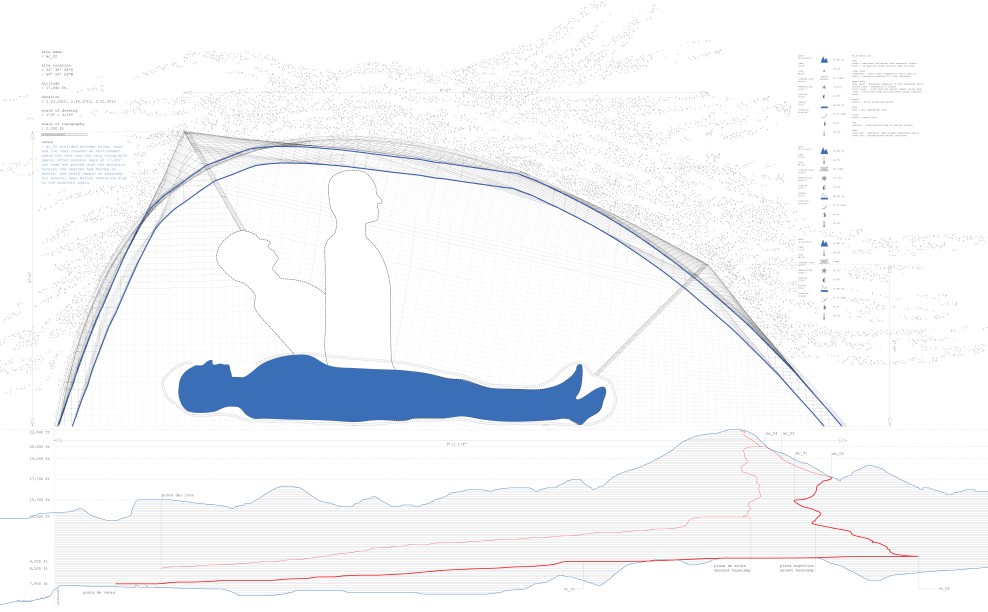
In academia, we rely on presentation models and drawings as a critical medium to our conversations. I want to add a chapter. I want to display models that have been shredded by wind, and bleached from sunlight. Physical models we can learn from. Now, back in Ann Arbor I am able to examine my torn, patched, and sun burnt full scale model. Through my proposed working methodology it becomes evident the successes and failures of the design intentions. As I begin the process of informative re-design, I gather the rich body of knowledge from my research to test, alter and modify the tent through a series of drawings.
the larger conversation
April 9, 2012 by Leave a Comment

As I return from the main research and testing phase of the project, I am able to continue the design and conversation back in Ann Arbor. The work has unexpectedly granted me the opportunity to engage with a multitude of people interested in the expedition. For me, it is a fantastic way to frame my thesis outside of the college and into the world.
The video below is from the Fox News Morning Show. Please fast forward through the commercials to view the full conversation.
 inhabitable